


If your child’s dentist or orthodontist mentioned an “impacted canine” at the last checkup, you probably have two questions right away: how serious is it, and what happens next? Impacted canines in kids are common. They are usually identified between ages 9 and 13, and most of these teeth can be corrected with a brief surgical procedure along with braces. The upper canines, often called “eye teeth”, are the long, pointed teeth on either side of the front four. After wisdom teeth, they’re the teeth most likely to get stuck under the gums. At Dr. Jenna D. Godwin Oral and Maxillofacial Surgery in Seminole, FL, we talk with parents who are hearing this term for the first time, and the first visit is mostly about turning confusion into a clear plan.
Here’s what is going on inside the jaw. A permanent upper canine starts forming high in the face, near the base of the nose, and it has the longest trip of any tooth to reach its spot in the smile. On the way down it follows the root of the lateral incisor next to it like a guide rail. When that path is crowded, blocked, or off course, the canine stalls. In most cases it drifts toward the roof of the mouth, where thick bone makes it very unlikely to come in on its own. That matters because the canine has the longest root in the mouth and helps steer the bite when the jaw moves side to side. A canine stuck in the wrong place can also press on the roots of the front teeth and slowly damage them, often without any pain to warn you.
Timing of intervention is the part that parents can actually influence. If caught early, around age 10 or 11, a stuck canine can sometimes be redirected by simply removing the baby tooth sitting in its way. Caught at 14 or later, surgery is far more likely to be necessary, and in adults the tooth becomes difficult to move at all. If surgery is needed, it’s typically a short office procedure done with local anesthesia or IV sedation, not a hospital stay. Dr. Jenna D. Godwin is a Diplomate of the American Board of Oral and Maxillofacial Surgery who refined her surgical skills in the U.S. Army, where she also served as a Program Director training resident surgeons. She uses 3D scans or digital X-rays to map exactly where the tooth sits, works directly with your child’s orthodontist, and makes sure your family leaves with clear written instructions for before and after surgery.
This Article Will Address
- Why a canine gets stuck
- Early warning signs you can watch for at home
- The age window when treatment tends to work best
- When a stuck canine can be kept and when it can’t
- What happens during an expose and bond procedure
- How your child’s orthodontist and oral surgeon work together
What Causes a Canine Tooth to Become Impacted?
Most canines become impacted because they run out of room or lose their path on the long trip down into the mouth. Usually it’s a combination of factors rather than one clear cause. The most common ones include:
- Crowding, where the teeth already in place leave too little space in the arch
- A baby canine that hangs on too long and sits in the permanent tooth’s path
- A lateral incisor that is small, peg-shaped, or missing, which takes away the guidance that the canine tooth normally follows
- An extra tooth, cyst, or other growth blocking the way
- Family history, since canine problems tend to show up in siblings and parents
Girls are affected about twice as often as boys, and most impacted upper canines end up on the palate side rather than the cheek side. None of this is caused by anything a parent did or didn’t do.
What Early Signs Should Parents Watch For?
The clearest sign is a baby canine that is still firmly in place at age 12 or 13 while the permanent tooth hasn’t appeared. Because a stuck canine rarely hurts, these quieter clues are worth noticing:
- The canine on one side comes in, but the other side still hasn’t months later
- The baby canine isn’t loose at all by the early teen years
- A front tooth next to the gap looks tipped, flared, or rotated
- A firm bump on the roof of the mouth behind the front teeth
Around ages 9 and 10, a dentist can usually feel the developing canine as a small bump in the gum above the baby tooth. When that bump is missing, a panoramic X-ray is the next step. Any one of these signs is a reason to schedule an evaluation, not a reason to panic.
At What Age Is Impacted Canine Treatment Usually Done?
Most treatment happens between about ages 10 and 14, with surgical exposure typically done somewhere in the 11 to 14 range once braces have opened enough space. The first window is the interceptive one. When a dentist or orthodontist spots trouble at 10 or 11, removing the baby canine alone often lets the permanent tooth correct its course over the following months. A 2025 literature review in Dentistry Journal found this approach works best at those younger ages and becomes less reliable from ages12 to 14.
If the canine still won’t come in, the next step is surgery paired with orthodontic traction, which is most predictable while a child’s jaw is still growing. Teens and adults can be treated too, but the tooth tends to move more slowly, and the odds of it fusing to the bone increase with age.
Can an Impacted Canine Be Saved Instead of Extracted?
Yes, in most children and teens the canine can be saved, and keeping it is almost always the goal. This tooth anchors the corner of the smile and guides how the teeth meet, so losing it changes more than appearance. Saving it usually means uncovering the tooth and letting braces bring it into line, which is the core of our impacted canine treatment.
Extraction becomes the better choice in a few specific situations:
- The tooth has fused to the surrounding bone (ankylosis) and won’t move under orthodontic force
- It lies nearly horizontal or so far out of position that pulling it risks harming nearby roots
- It has already damaged the root of a neighboring tooth or formed a cyst
- The family decides against the braces time that traction requires
When removal is the right call, Dr. Godwin performs it as a planned surgical procedure, much like our other tooth extractions, and the orthodontist then closes the space or holds it open for a future replacement once jaw growth is finished.
What Is Exposure and Bonding for an Impacted Tooth?
Exposure and bonding is a short surgery where the oral surgeon uncovers the buried canine and attaches a small bracket so braces can gently pull the tooth into place. Most visits follow the same general order:
- Your child is numbed with local anesthesia or, when appropriate, relaxed with IV sedation
- The gum over the tooth is lifted, and a thin layer of bone is removed if it covers the crown
- Any baby canine still in place is removed at the same time
- A small bracket, usually attached to a thin gold chain, is bonded to the crown
- The gum is placed back and stitched, often with the chain left peeking through and secured to the archwire on the braces
Afterward, most kids have mild soreness and swelling for two or three days and do well with soft foods and the care steps our team sends home. Within a few weeks, the orthodontist connects the chain to the braces and starts a light, steady pull. The tooth usually takes several months to a year or longer to come down, depending on how deep it sits.
How Do the Oral Surgeon and Orthodontist Work Together?
The orthodontist plans the tooth’s movement and moves it, while the oral surgeon uncovers it and sets up the attachment that makes movement possible. In a typical case, the orthodontist places braces first to open space in the arch. Then your child comes to our office for 3D imaging and the exposure. A short time later, the orthodontist takes over again, adjusting the chain at regular visits until the canine lines up with its neighbors.
Because the two offices agree on timing ahead of time, the bracket goes exactly where the orthodontist wants it and the pull starts in the right direction. That coordination also means you aren’t stuck relaying messages between offices. Our patient care coordinators, Stephanie and McKensi, help schedule the surgery around your child’s orthodontic visits and school calendar. Exposure is just one part of the full range of oral surgery procedures Dr. Godwin performs for patients of all ages.
Schedule Your Child’s Impacted Canine Consultation in Seminole
If you’re still wondering whether that stubborn baby tooth or missing eye tooth needs attention, a consultation will give you a clear answer and a plan. Dr. Jenna D. Godwin Oral and Maxillofacial Surgery is welcoming new patients and referrals from dentists and orthodontists throughout the area, and our calm, light-filled office in Seminole, FL, is set up to put nervous kids and parents at ease. Call (727) 397-8500 or schedule an impacted canine consultation online, and we’ll help you take the next step while the timing is still on your child’s side.
Sources
- Cleveland Clinic: Impacted Tooth
- Dentistry Journal (PMC): Treatment Options in Impacted Maxillary Canines, A Literature Review
- Florida Dental Association: Surgical Exposure of Impacted Teeth
Dr. Godwin
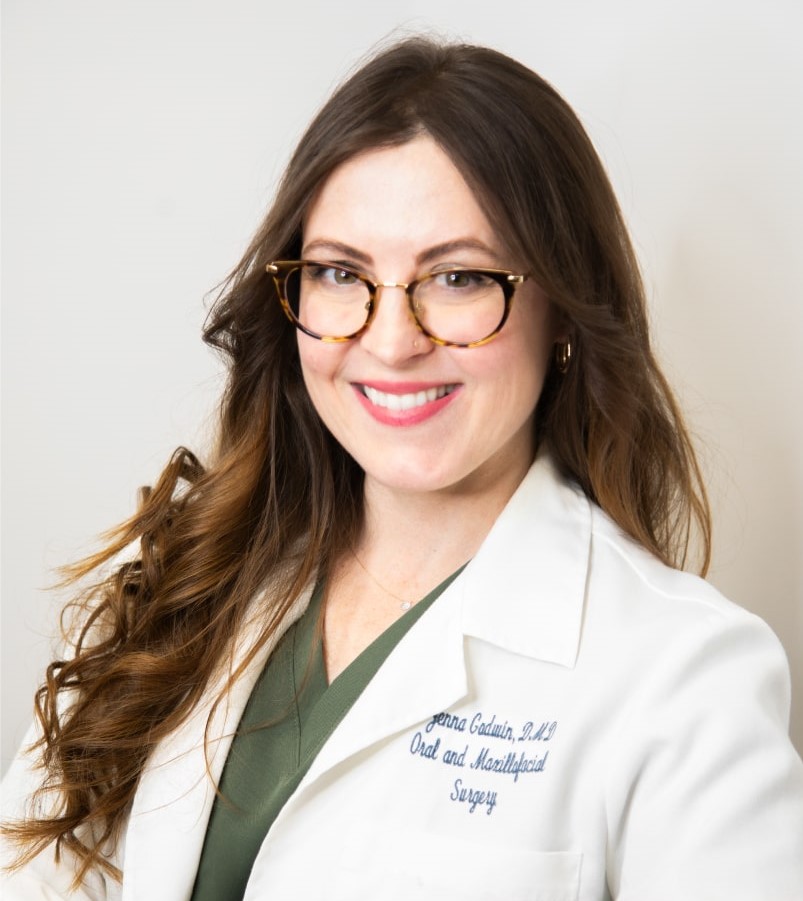
Dr. Jenna D. Godwin is a board-certified oral and maxillofacial surgeon serving patients in Seminole, Florida. She earned her Doctor of Medical Dentistry degree from the University of Florida and went on to serve in the U.S. Army, where she developed advanced surgical expertise and later trained resident surgeons. Her background combines the precision of military training with a compassionate, patient-centered approach, allowing her to provide personalized care tailored to each patient’s needs. Dr. Godwin is a Diplomate of the American Board of Oral and Maxillofacial Surgery and the National Dental Board of Anesthesiology, and she is an active member of several professional dental and surgical organizations. Outside of the office, she enjoys exercise, travel, and spending time with her son, Elliott. Dr. Godwin is committed to creating a calm, supportive environment where every patient feels valued, informed, and confident in their care.